Radiation Therapy De-escalation in cT1–2N1 Breast Cancer After Primary Systemic Treatment (RAPCHEM, 10-Year Results)
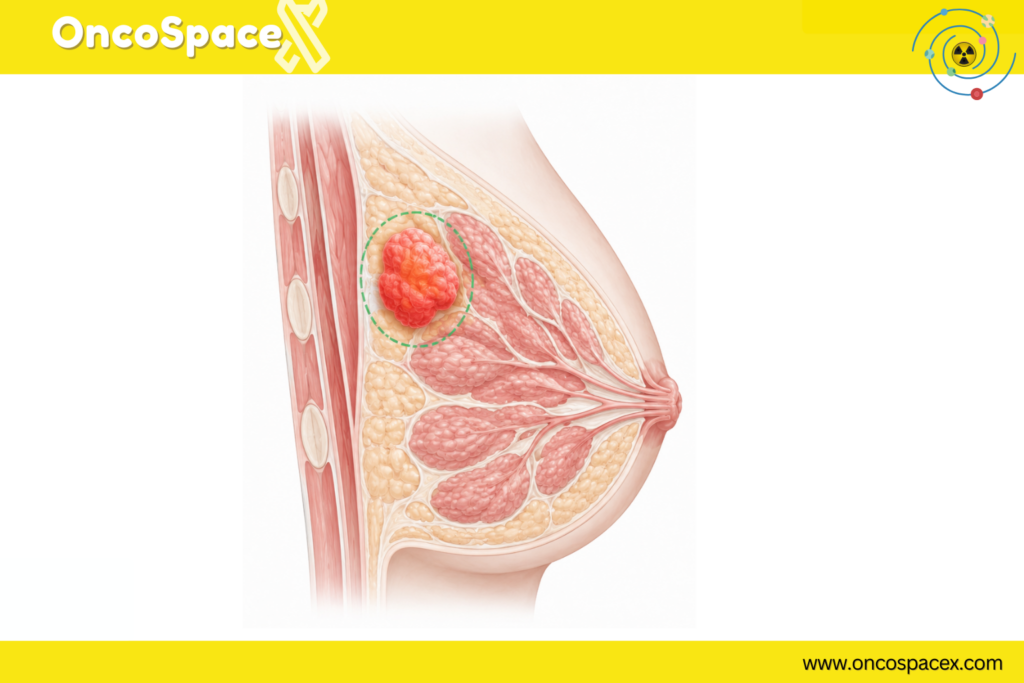
At ESTRO 2026, Dr. Fleur Mauritz (Maastro, Maastricht, Netherlands) presented 10-year outcomes of the RAPCHEM prospective registry study¹, evaluating response-adapted de-escalation of locoregional radiotherapy in cT1-2N1M0 breast cancer after primary systemic treatment.
A total of 838 patients were stratified by ypN status into three risk groups with corresponding radiotherapy strategies. In ypN0 patients, treatment consisted of whole-breast irradiation after breast-conserving surgery, while radiotherapy was omitted after mastectomy. In ypN1 disease, patients received whole-breast or chest wall irradiation, with selective level I–II axillary irradiation if no axillary dissection was performed.
In ypN2+ patients, treatment included chest wall or whole breast irradiation with comprehensive regional nodal irradiation (axillary levels III–IV, with or without internal mammary node coverage depending on surgical extent).
At 10 years, locoregional recurrence remained low (2.9%), with no significant differences between risk-adapted groups. Hormone receptor–negative disease was associated with higher recurrence risk, with all triple-negative failures occurring within 5 years.
These results support long-term safety of risk-adapted de-escalation of locoregional radiotherapy after systemic therapy.
-
de Wild SR, de Munck L, Simons JM, Verloop J, van Dalen T, Elkhuizen PH, Houben RM, van Leeuwen AE, Linn SC, Pijnappel RM, Poortmans PM. De-escalation of radiotherapy after primary chemotherapy in cT1–2N1 breast cancer (RAPCHEM; BOOG 2010–03): 5-year follow-up results of a Dutch, prospective, registry study. The Lancet Oncology. 2022 Sep 1;23(9):1201-10.