Building the Next Generation of Radiation Oncology:
How the ESTRO Early Career Committee is Creating a Global Community
Introduction
Starting a career in radiation oncology involves much more than developing clinical knowledge and technical skills. Early-career clinicians, medical physicists, radiobiologists, and radiation therapists (RTTs) often encounter similar challenges, including finding mentors, establishing professional networks, presenting their research, developing leadership skills, and navigating increasingly multidisciplinary career paths.
To address these needs, the European Society for Radiotherapy and Oncology (ESTRO) established the Early Career Committee (ECC), formerly known as Young ESTRO (yESTRO), currently chaired by Azadeh Abravan, Senior Research Fellow at University of Edinburgh.
The committee represents early-career professionals across all disciplines within radiation oncology and works to ensure that their perspectives are reflected in ESTRO’s educational, scientific, and strategic activities. Its goal is to support the professional development of the next generation by creating opportunities to learn, collaborate, and become actively involved in the Society and the wider radiation oncology community.
More than a committee
The Early Career Committee serves as the official voice of young professionals within ESTRO. Its activities extend far beyond organizing sessions during the annual congress. Throughout the year, the committee works to strengthen networking opportunities, promote interdisciplinary collaboration, support national young professional groups and contribute to ESTRO educational initiatives.
Perhaps most importantly, the committee aims to ensure that early-career members are not merely attendees at ESTRO meetings but active participants in shaping the Society’s future.
The Early Career Track at ESTRO 2026
At ESTRO 2026 in Stockholm, the Early Career Track was further developed, continuing to offer educational and networking opportunities for young radiation oncology professionals.
The scientific programme included sessions on practical aspects of career development, digital innovation, leadership, science communication, and emerging challenges in the field. Alongside these, interactive networking activities provided participants with opportunities to engage with peers and senior colleagues globally.
Buddy System: Making a Large Congress Feel Smaller
One of the committee’s newest initiatives is the Early Career Buddy System.
Initially introduced as a pilot project during ESTRO 2025, the programme pairs first-time congress participants with more experienced ESTRO members. The aim is simple: help newcomers navigate the congress, attend sessions together, meet colleagues, and feel integrated into the international radiation oncology community.
Following the success of the pilot, the Buddy System returned for ESTRO 2026, reflecting the committee’s commitment to making large international meetings more welcoming and accessible for first-time attendees.
Walk & Talk: Networking Beyond the Lecture Hall
ESTRO 2026 also introduced a new networking initiative – Walk & Talk.
The informal activity encouraged delegates to continue professional discussions while walking together, creating opportunities for relaxed conversations outside traditional scientific sessions. Such formats acknowledge that some of the most valuable congress experiences often occur between lectures, where collaborations and friendships begin.
The addition of Walk & Talk reflects the committee’s broader philosophy that networking should be approachable, inclusive, and integrated throughout the congress experience.
Speed Networking and Community Building
Networking remained a central theme throughout ESTRO 2026.
The Early Career Networking Session, organized in a speed-dating format, enabled participants to meet numerous colleagues within a short period, facilitating interdisciplinary connections among clinicians, physicists, biologists, and RTTs.
Complementing these structured activities, the Early Career Community Dinner provided a relaxed social environment where participants could continue conversations initiated during scientific sessions, further strengthening professional networks beyond institutional and national boundaries.
Five Years of the ESTRO Mentoring Programme
Among the committee’s flagship initiatives is the ESTRO Mentoring Programme.
Following several successful editions, the programme entered its fifth cycle at ESTRO 2026 in Stockholm. Developed jointly by the Early Career Committee and the ESTRO Education Council, the programme matches selected early-career professionals with experienced mentors for a structured one-year mentoring relationship.
Unlike programmes focused primarily on research collaboration, the ESTRO Mentoring Programme emphasizes professional and personal development. Through regular meetings held approximately every three months, mentors and mentees discuss career planning, leadership, professional challenges, work-life balance, and long-term career goals.
Each edition includes approximately twenty carefully selected mentees representing different disciplines, professions, genders, and geographical regions, reflecting ESTRO’s commitment to diversity and interdisciplinary collaboration.
Georgian Representation in the fifth Mentoring Cycle
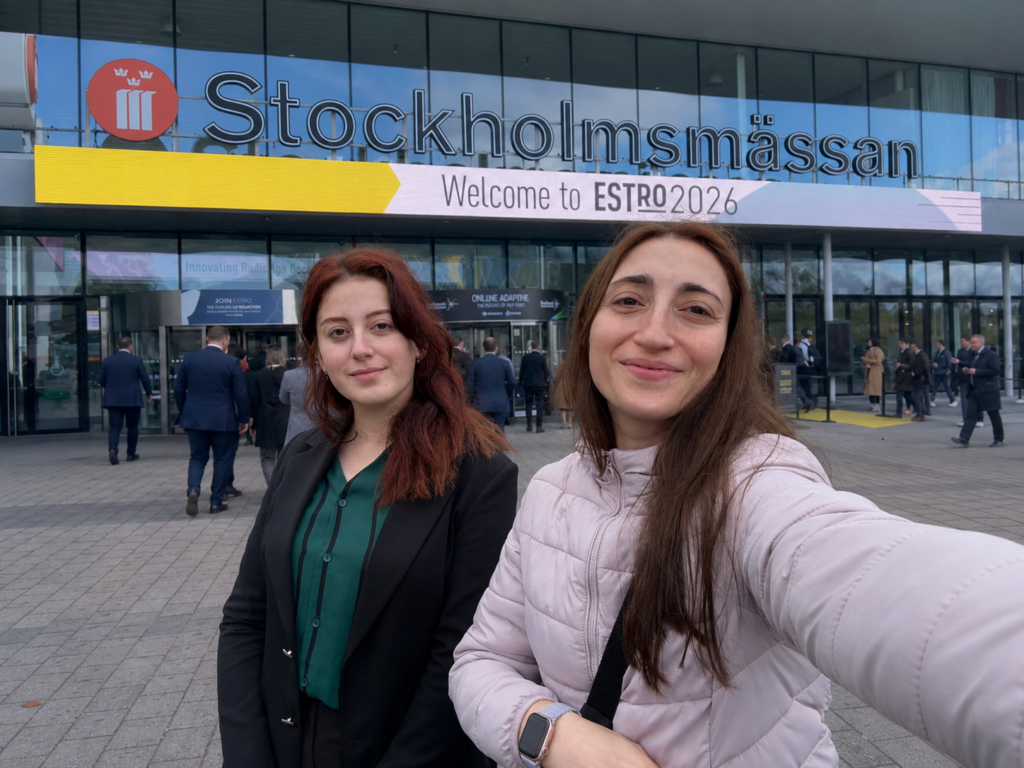
The fifth edition of the ESTRO Mentoring Programme included two participants from Georgia, both affiliated with OncoSpace X, reflecting engagement at both national and journal levels within the initiative.
OncoSpace X Founder and Editor-in-Chief Tinatin Alaverdashvili, MD, and Advisory Board Member Mariam Tchiabrishvili, MD, PhD(c) at Tbilisi State University and Radiation Oncologist at Todua Clinic, were selected as mentees in the programme.
This opportunity represents an important step in the professional development of young Georgian radiation oncologists, with mentorship from leading international experts also contributing to the development of the field in Georgia.
Looking Ahead
The evolution of the ESTRO Early Career Committee illustrates how professional societies can support young specialists beyond traditional education.
Through mentoring, networking initiatives, leadership opportunities, and active representation within ESTRO governance, the committee is building a collaborative European community where early-career professionals can develop not only scientific expertise but also the professional relationships and leadership skills that will shape the future of radiation oncology.
As radiation oncology continues to evolve through technological innovation and increasingly multidisciplinary care, initiatives that invest in people may prove just as important as advances in science itself.